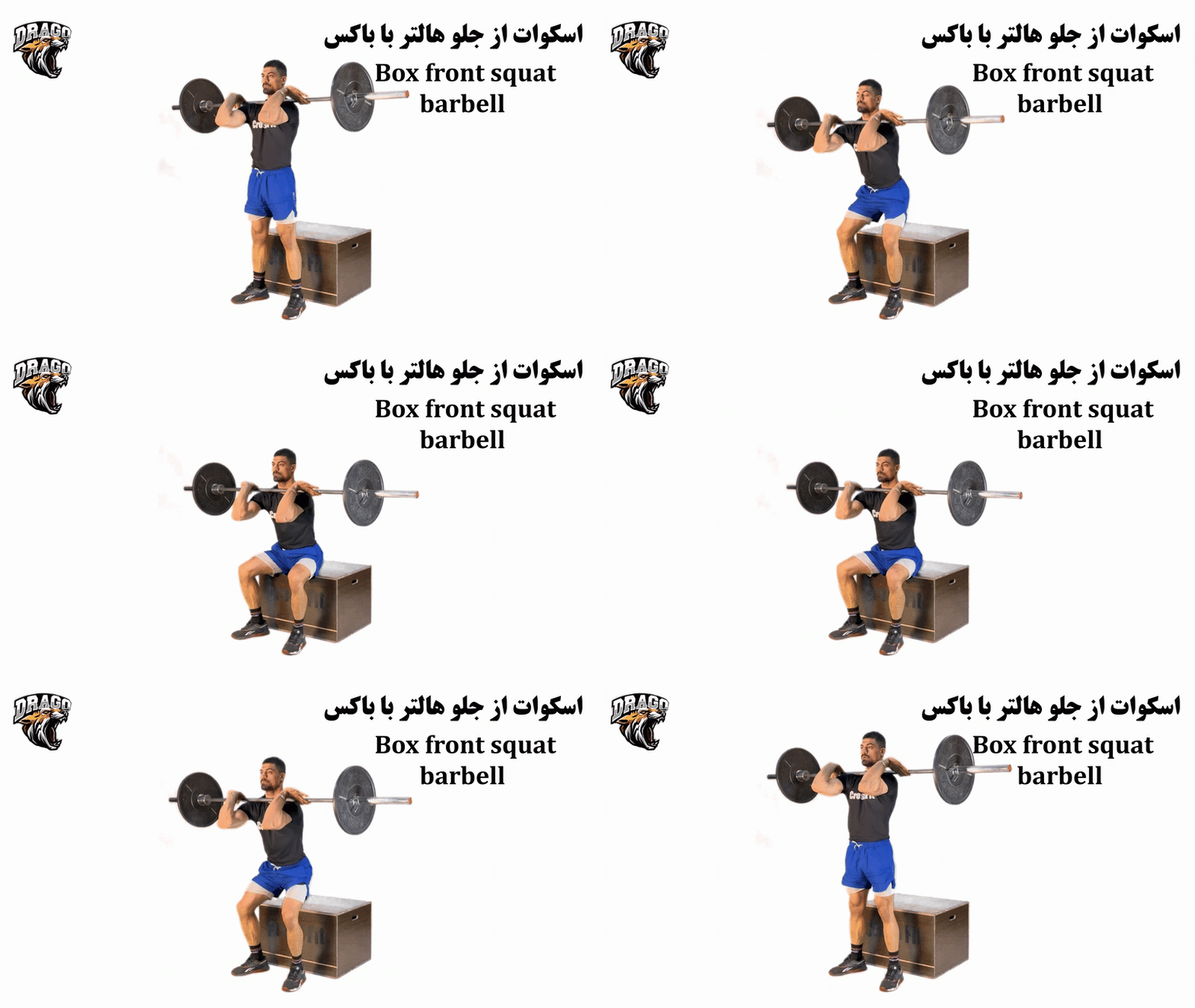
The Front Box Squat with barbell is a powerful lower-body compound exercise that primarily targets the quadriceps, glutes, and core. Using a box allows for more controlled squat depth, maintains proper form, and emphasizes correct movement patterns. This movement is excellent for improving squat technique—one of the key CrossFit exercises—increasing functional strength, injury prevention, and explosive muscle development.
Suggested reading: Box Back Squat Barbell
Benefits of the Front Box Squat
- Strengthens the quadriceps, glutes, and hamstrings
- Improves posture and core stability
- Helps learn deep squats with proper form
- Reduces lower back strain compared to the back squat
- Enhances carryover to sports movements like running, jumping, and weightlifting
- Ideal for controlled recovery or technical training
Muscles Worked in the Front Box Squat
| Muscle | Role |
|---|---|
| Quadriceps | Primary mover |
| Gluteus Maximus | Assists in rising from seated position |
| Hamstrings | Stabilization role |
| Core muscles | Spinal support and torso control |
| Upper body (Shoulders and Forearms) | Holding barbell in front rack |
Proper Execution of the Front Box Squat
- Box and Bar Setup
- Box height should allow thighs to be parallel or slightly below parallel when seated.
- Barbell should be set on the rack around chest height.
- Front Rack Position
- Barbell rests on the front of the shoulders.
- Elbows high, arms parallel to the floor.
- Wrists can be fully under the bar or in cross-grip position.
- Descent
- With control, push hips back and sit on the box.
- Keep spine neutral, knees out, heels on the floor.
- Pause
- Hold the seated position for 1–2 seconds without relaxing (muscles remain active).
- Ascent
- Push through the heels, engaging quads and glutes, return to standing.
- Keep torso upright.
We recommend reading the article What is CrossFit?
Key Tips for Proper Execution
- Avoid excessive forward lean; keep the torso upright.
- Do not fully relax on the box; maintain muscle tension.
- Start with a lighter barbell to focus on technique.
- If front rack position is difficult, use a lighter bar or cross-grip.
- Controlled breathing: inhale before movement, hold during descent, exhale on the way up.
Comparison: Box Front Squat vs Front Squat vs Back Squat
| Feature | Box Front Squat | Front Squat | Back Squat |
|---|---|---|---|
| Knee Stress | Moderate | High | Lower |
| Back Stress | Lower | Moderate | Higher |
| Required Stability | High | High | Moderate |
| Educational Use | Excellent | Good | Average |
| Range of Motion | Controllable | Full | Full |
Training Program Variations
For Beginners
- 3 sets × 8 reps with light weight, focus on form
For Strength
- 5 sets × 3–5 reps at 75–90% of 1RM
- 2-second pause on the box to build explosive power
For CrossFit or HIIT
- EMOM or For Time (see EMOM training system)
- Combine with Burpees, Deadlift, or Thrusters
Common Mistakes in the Front Box Squat
- Fully relaxing on the box (loss of muscle tension)
- Dropping elbows (breaking front rack form)
- Crashing onto the box instead of a controlled sit
- Using a box that’s too high or too low
- Holding your breath for too long
Conclusion
The Front Box Squat is a highly effective movement for developing strength, control, and correct squat mechanics. It is essential for both beginners learning proper form and advanced athletes aiming for targeted progression. If your goal is to squat with less stress on the knees and back while strengthening your core and improving posture, this exercise should be a core part of your training plan.
Keep reading